


When Is a Portable Digital X-Ray at Home a Practical Option for Patients in Pune and PCMC?
2026-10-13T12:07:00  read more
 read more
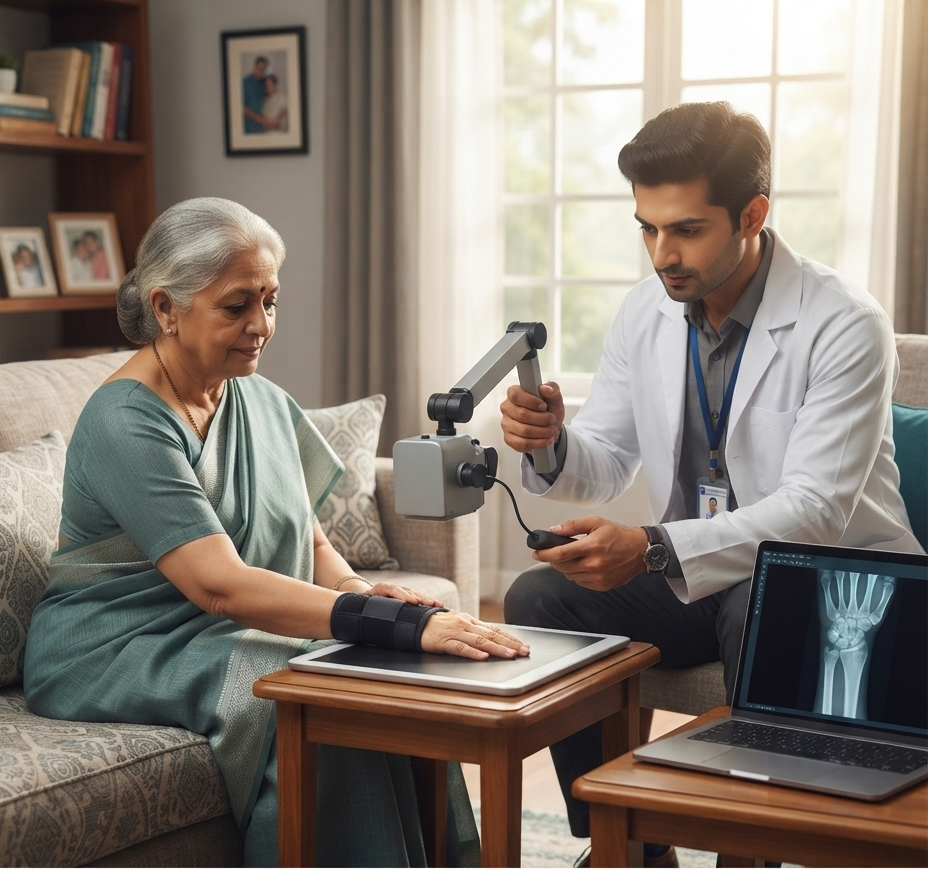

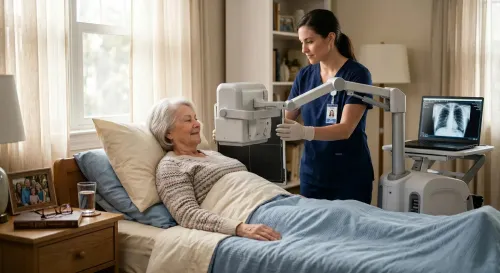
An X-ray may be an important part of a doctor's assessment after an injury or when investigating a medical concern. However, getting to a diagnostic centre is not always easy. Elderly patients, people with limited mobility and patients recovering at home may find travel physically challenging. For selected examinations, portable digital X-ray at home may offer an alternative. Understanding the process, preparing the patient and recognising when urgent hospital care is needed can help families make informed decisions. ## What Does Portable X-Ray at Home Mean? Portable X-ray uses mobile radiography equipment to perform suitable X-ray examinations outside a conventional fixed radiology room. A trained radiography professional brings the equipment to the patient's home and positions it according to the prescribed examination. Digital images are captured electronically and made available for review by an appropriately qualified medical professional. The examination should be performed according to the doctor's prescription and appropriate radiation-safety procedures. The availability of portable equipment does not mean every examination can be performed at home. The body part, required views, patient's condition and positioning requirements must be considered. ## Who May Need a Home X-Ray? A home X-ray may be considered when a doctor has prescribed imaging and the patient finds travelling difficult. Examples include: * Older adults who need assistance with mobility. * Patients recovering from surgery who have movement restrictions. * People with limited mobility following an injury. * Patients for whom the treating doctor considers portable imaging appropriate. * Selected follow-up examinations where home imaging is clinically suitable. The final decision depends on the medical circumstances. A home visit should not replace a hospital assessment when a patient needs urgent or specialised care. ## What Should You Do Before Arranging a Home X-Ray? **Keep the prescription ready.** Make sure the requested body part and examination details are clear. If the doctor has requested specific views, share that information when arranging the service. **Describe the patient's condition.** Explain whether the patient can sit, stand or turn comfortably. Mention recent surgery, injury, movement restrictions or severe pain. **Prepare the examination area.** Keep enough clear space for the equipment and for the professional to work safely. **Avoid unnecessary movement.** Do not force the patient to stand or change position if doing so causes pain or may worsen an injury. **Share relevant medical information.** Inform the treating doctor and radiography professional if pregnancy is possible, where relevant, before the examination. **Follow safety instructions.** X-rays use ionising radiation. The examination should be justified, and appropriate radiation-safety practices should be followed by trained personnel. ## Does Every Injury Require an X-Ray? No. An X-ray is not automatically necessary after every fall or injury. A doctor determines the need for imaging based on the patient's symptoms, examination findings, medical history and suspected injury. Severe pain, an obvious deformity, suspected major fracture or inability to bear weight may require urgent medical assessment. Suspected head, neck or spinal injuries and other serious symptoms should be evaluated urgently. Do not wait for a routine home diagnostic appointment if emergency care may be needed. ## Portable X-Ray and Hospital Imaging: What Is the Difference? Portable and fixed X-ray systems both use X-ray radiation to create images of internal structures. Portable equipment allows selected examinations to be performed at the patient's home. Some examinations require specialised equipment, additional views or hospital facilities. The appropriate setting depends on the clinical question and the patient's condition. Digital imaging does not mean radiation-free imaging. A suitable examination should be carried out using appropriate technique and safety precautions. ## Can ECG and Blood Tests Also Be Performed at Home? In addition to portable X-ray, some diagnostic investigations can be arranged at home when appropriate. **ECG at home:** An electrocardiogram records the electrical activity of the heart. It may be prescribed to investigate certain symptoms or monitor a condition. New or severe chest pain, difficulty breathing, fainting or other concerning symptoms may require emergency assessment rather than waiting for a routine ECG visit. **Blood test at home:** A trained professional collects a blood sample for the laboratory tests ordered by the doctor. Some tests require fasting or other preparation. Patients should confirm the requirements for their specific tests rather than assume that fasting is always necessary. X-ray, ECG and blood tests provide different information. The treating doctor decides which investigations are needed. ## Home Diagnostic Services in Pune and PCMC Kumud X-Ray Diagnostics provides portable X-ray, ECG and blood sample collection services at home across Pune and PCMC, subject to location coverage, examination suitability and appointment availability. If travelling is difficult, families can explain the patient's condition and share the prescription when enquiring about a home X-ray. The required examination and available service options can then be assessed. ## Frequently Asked Questions **1. Can a portable X-ray be arranged at home in Pune?** Suitable examinations may be arranged at home across Pune and PCMC, depending on the prescribed examination, location coverage and availability. **2. Is a home X-ray appropriate for patients with limited mobility?** It may be an option when the examination is suitable and the patient can be positioned safely. Suitability must be assessed before the visit. **3. What documents should I keep ready?** Keep the doctor's prescription and the relevant examination details available. Share any movement restrictions or important medical information. **4. Does portable digital X-ray use radiation?** Yes. X-rays use ionising radiation. The examination should be medically justified and performed with appropriate safety procedures. **5. Can all X-ray examinations be performed at home?** No. The body part, required views, equipment and patient's clinical condition determine whether a home examination is suitable. **6. Can I book an ECG and blood test at home as well?** Home ECG and blood sample collection may be available depending on the test, location and service availability. The doctor should guide which investigations are required. **7. Are services available across Pune and PCMC?** Kumud X-Ray Diagnostics offers home diagnostic services across Pune and PCMC, subject to location coverage and appointment availability. Confirm service availability for your specific address. ## Conclusion Portable X-ray at home may be a practical option for a patient who has a valid prescription and difficulty travelling, provided the required examination is suitable for a home setting. Preparation, clear communication and appropriate safety practices are important. Always follow the treating doctor's advice. For serious injuries or emergency symptoms, seek urgent medical care rather than waiting for a home diagnostic service.
 read more
 We hate spam too.


